Why Is Singapore Food Worth the Hype?
Singapore's food is the best reason to visit. The answer to 'what should I eat?' is: chicken rice, laksa, chilli crab, and whatever's on the menu at the nearest hawker centre. A full hawker meal costs SGD 4–8. This guide covers the essential dishes, best hawker centres by neighbourhood, and what's genuinely worth the queue — based on 55,000+ visitor food recommendations.
UNESCO recognised Singapore's hawker culture in 2024 not just for the food, but for the social glue hawker centres provide. The same hawker centre hosts a Hokkien mee stall next to a Muslim nasi padang stall next to a Tamil curry house, all sharing tables. It's genuine multicultural coexistence over a shared meal.
What Are the 20 Must-Eat Dishes in Singapore?
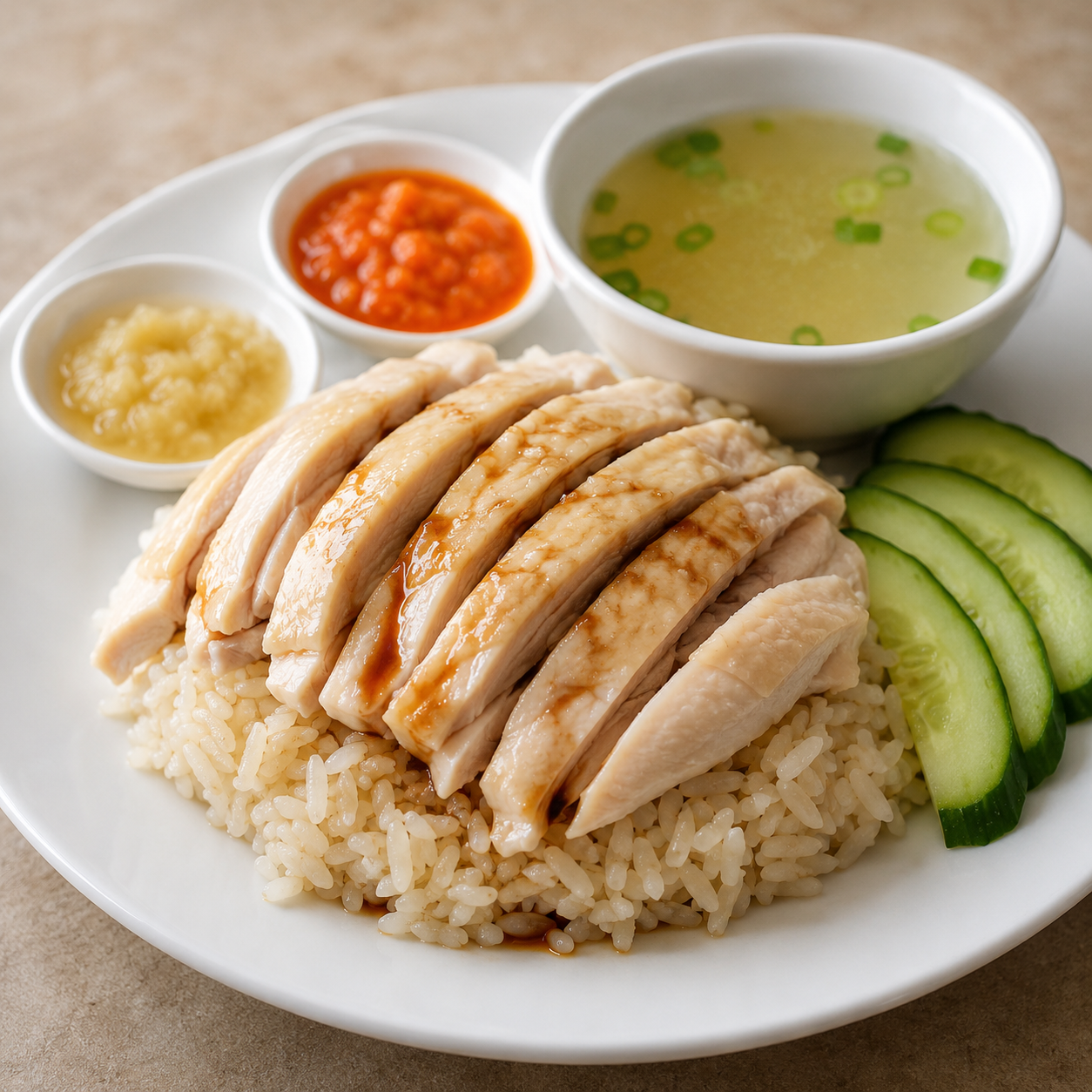
Hainanese Chicken Rice
Singapore's unofficial national dish. Poached or roasted chicken on fragrant rice cooked in chicken stock, served with ginger paste, chilli sauce, and dark soy. Simple, perfect, irreplaceable.
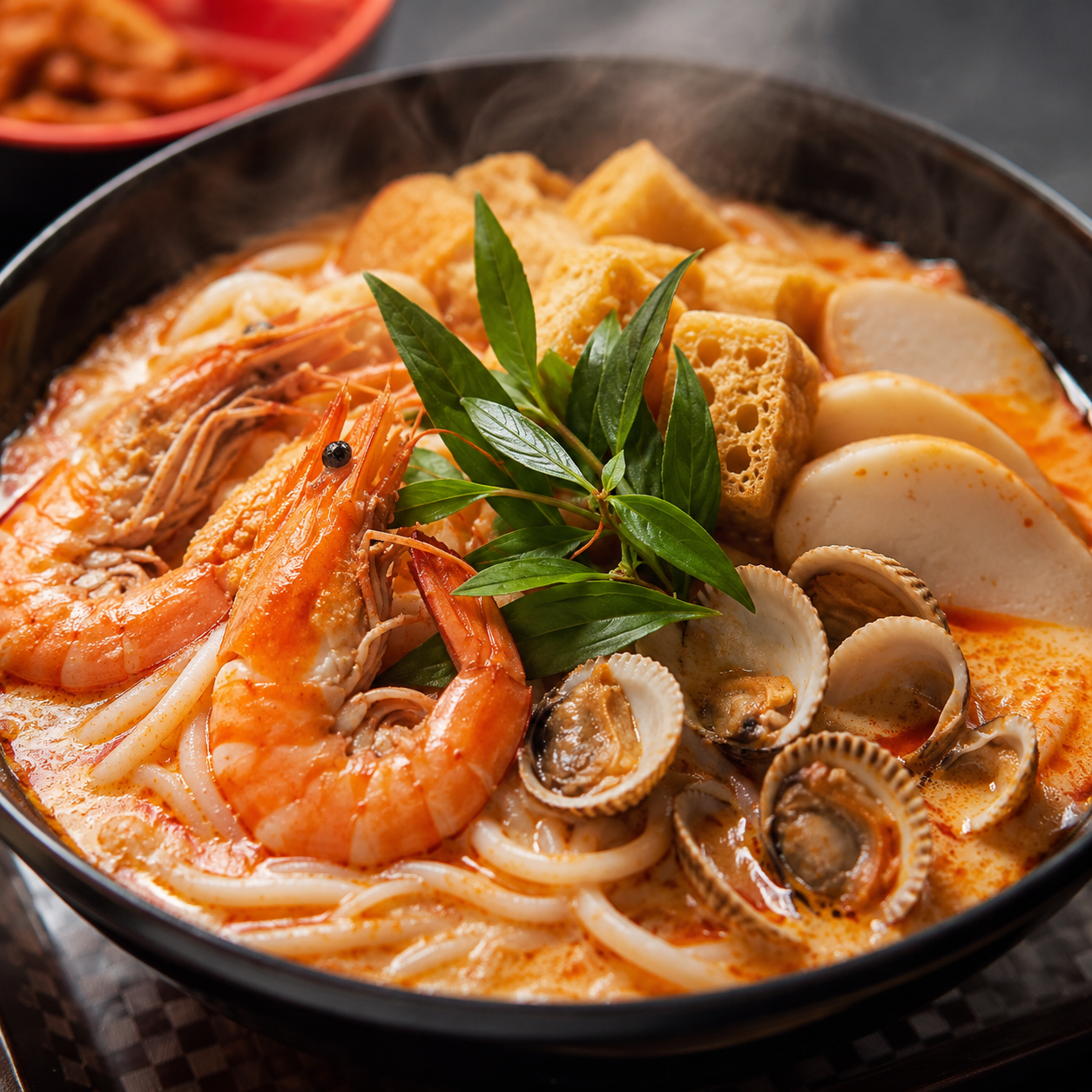
Laksa
Thick rice noodles in spicy coconut curry broth with prawns, fish cake, and cockles. Two styles: Katong laksa and curry laksa. Rich and completely addictive.
Char Kway Teow
Flat rice noodles wok-fried over roaring heat for that essential "wok hei", smoky breath of the wok. With egg, Chinese sausage, cockles, and dark soy. Singapore's best stir-fry.
Hokkien Mee
Yellow egg noodles and vermicelli stir-fried with prawn, squid, egg, and pork lard in a rich prawn broth. Served with sambal chilli and calamansi lime. Better than KL-style.
Wonton Mee
Springy egg noodles with barbecued pork (char siu), wontons in a clear broth, and mild chilli sauce. Light, clean, delicious. Available dry or in soup. One of Singapore's most comforting daily dishes.
Popiah (Spring Rolls)
Fresh (not fried) spring rolls filled with braised turnip, egg, tofu, prawns, and bean sprouts in a thin flour skin. A Hokkien classic, light and addictive.
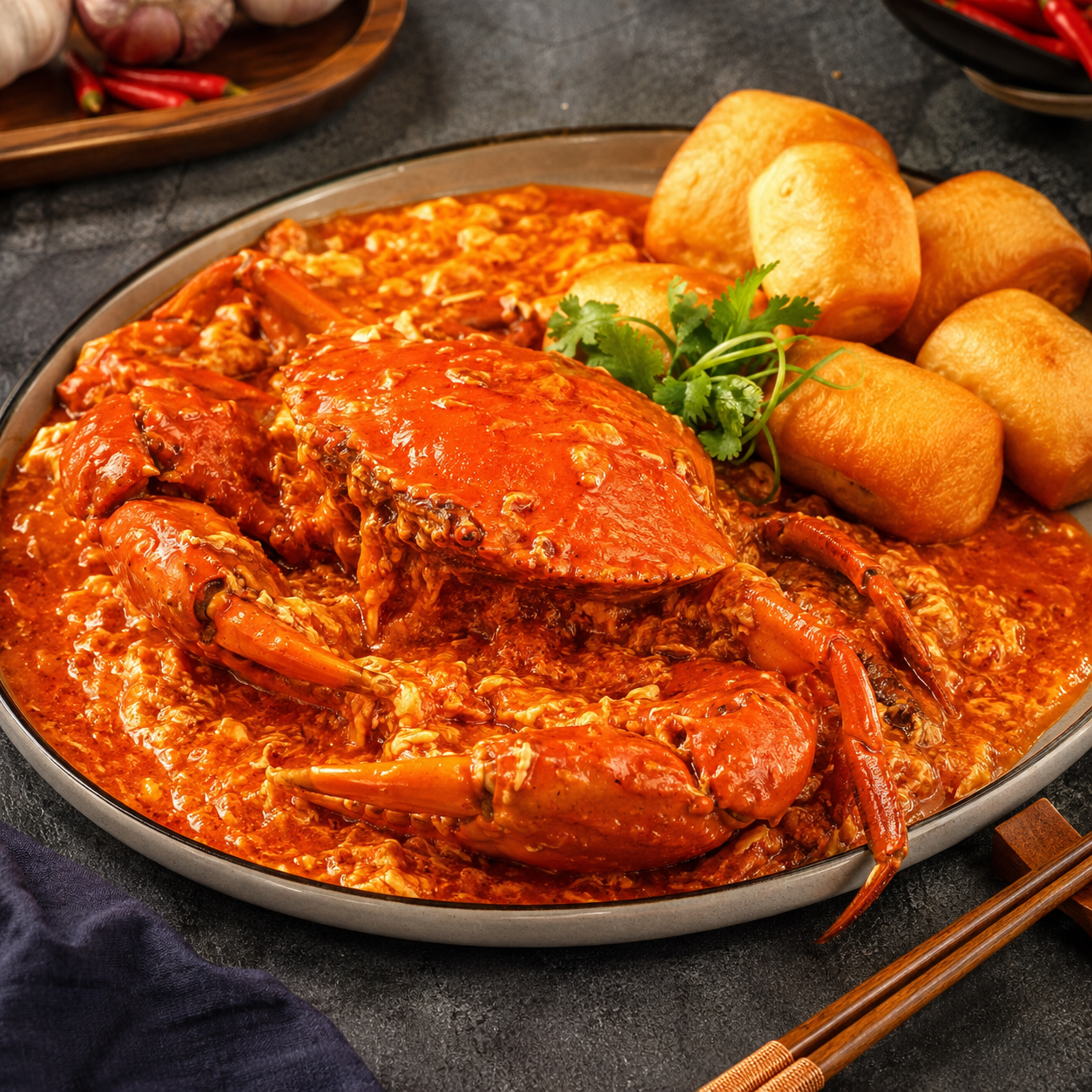
Chilli Crab
Whole mud crab in a semi-thick tomato and chilli sauce, sweet, spicy, slightly tangy. Eat with fried mantou buns to soak up the sauce. Messy, expensive, completely worth it.
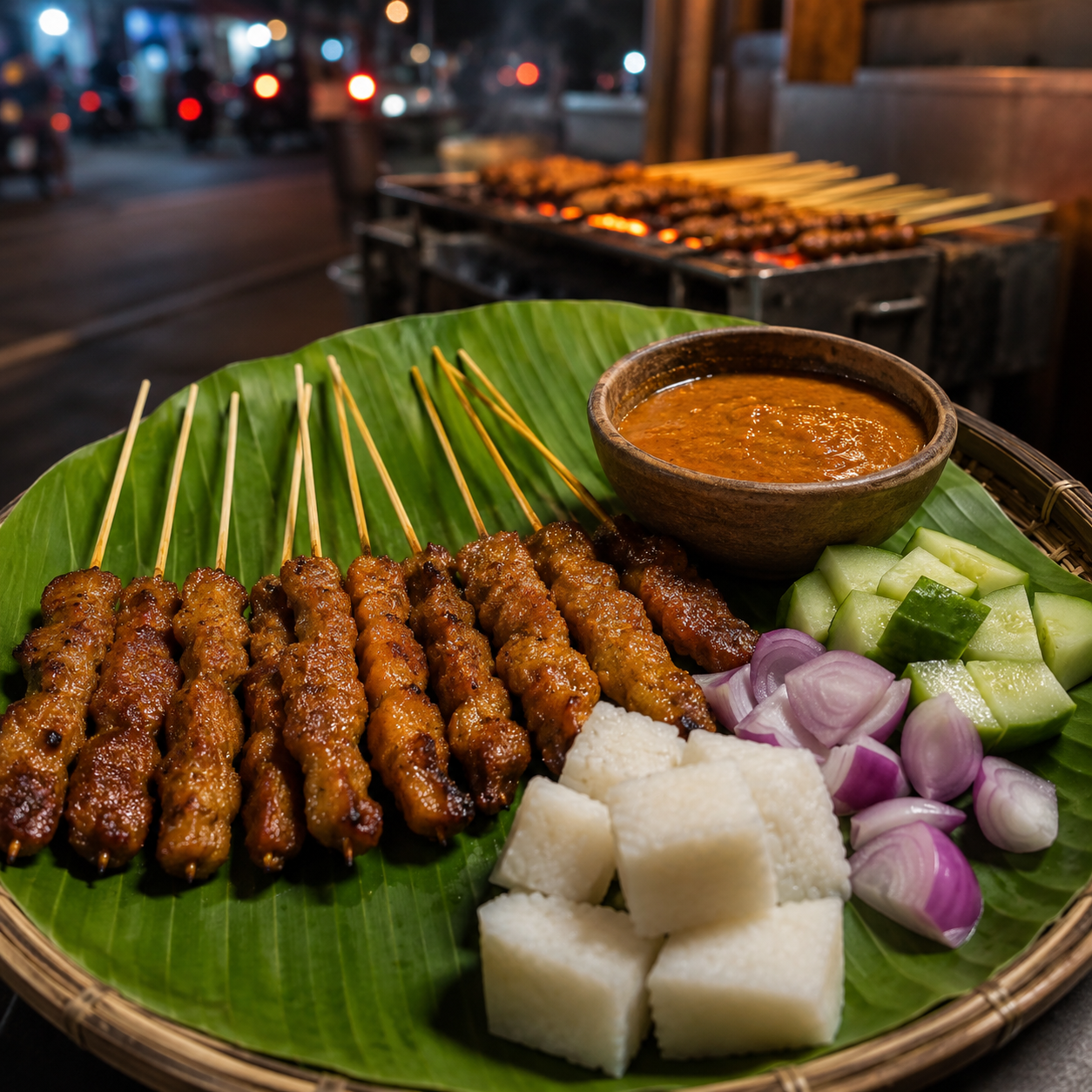
Satay
Marinated meat skewers grilled over charcoal, served with peanut sauce, ketupat rice cakes, and raw onion. Best eaten at Lau Pa Sat's outdoor satay strip at night.
Bak Kut Teh
Pork ribs simmered for hours in herbal broth, clear peppery Teochew-style or dark herbal Hokkien-style. Eaten with rice, fried dough (you tiao), and dark soy. A Sunday morning institution.
Rojak
Singaporean "salad" of dough fritters, turnip, cucumber, bean sprouts, and pineapple in a thick sweet prawn-paste sauce with crushed peanuts. Strange-sounding, addictively good.
Roti Prata
Flaky, buttery flatbread cooked on a griddle, served with fish or mutton curry. Plain S$1, with egg S$1.50. Singapore's best breakfast and late-night snack. 24-hour prata shops everywhere.
Nasi Lemak
Fragrant coconut rice with sambal, fried anchovies, peanuts, cucumber, and a fried egg. The Malaysian breakfast that Singapore has fully adopted as its own.
Nasi Padang
Sundanese/Malay steam-table restaurant, pick a pile of rice and add curries, rendang, sambal vegetables, and pickled salads. Muslim-halal. Warm, complex, filling.
Kaya Toast Set
Toasted bread with kaya (pandan and coconut egg jam) and butter; soft-boiled eggs with dark soy and white pepper; and kopi or teh. The Singapore breakfast trinity.
Prawn Noodle Soup
Thick prawn broth made from prawn heads and shells with fresh prawns, pork ribs, and your choice of yellow noodles, bee hoon or kway teow. Deep, oceanic, satisfying.
Muah Chee
Glutinous rice balls coated in ground peanut sugar or sesame. A street snack harder to find now but worth seeking. Simple, chewy, sweet, with origins in Chinese temple offerings.
Ondeh Ondeh
Pandan-flavoured glutinous rice balls filled with molten palm sugar, rolled in grated coconut. Bite gently, the sugar bursts. Singapore's most delightful dessert.
Ice Kachang
Shaved ice with rose, pandan, bandung syrup, red beans, jelly, and attap chee. Singapore's answer to summer heat, colourful, sweet, refreshing.
Teh Tarik
"Pulled tea", strong Indian black tea with condensed milk, poured between vessels to aerate, producing a frothy top. The soul of any Indian Muslim coffeehouse (mamak).
Kopi (Local Coffee)
Robusta beans roasted with butter and sugar, brewed through a cloth strainer with condensed milk. Darker and sweeter than Western coffee. Order: kopi (hot milk), kopi o (black), kopi peng (iced).
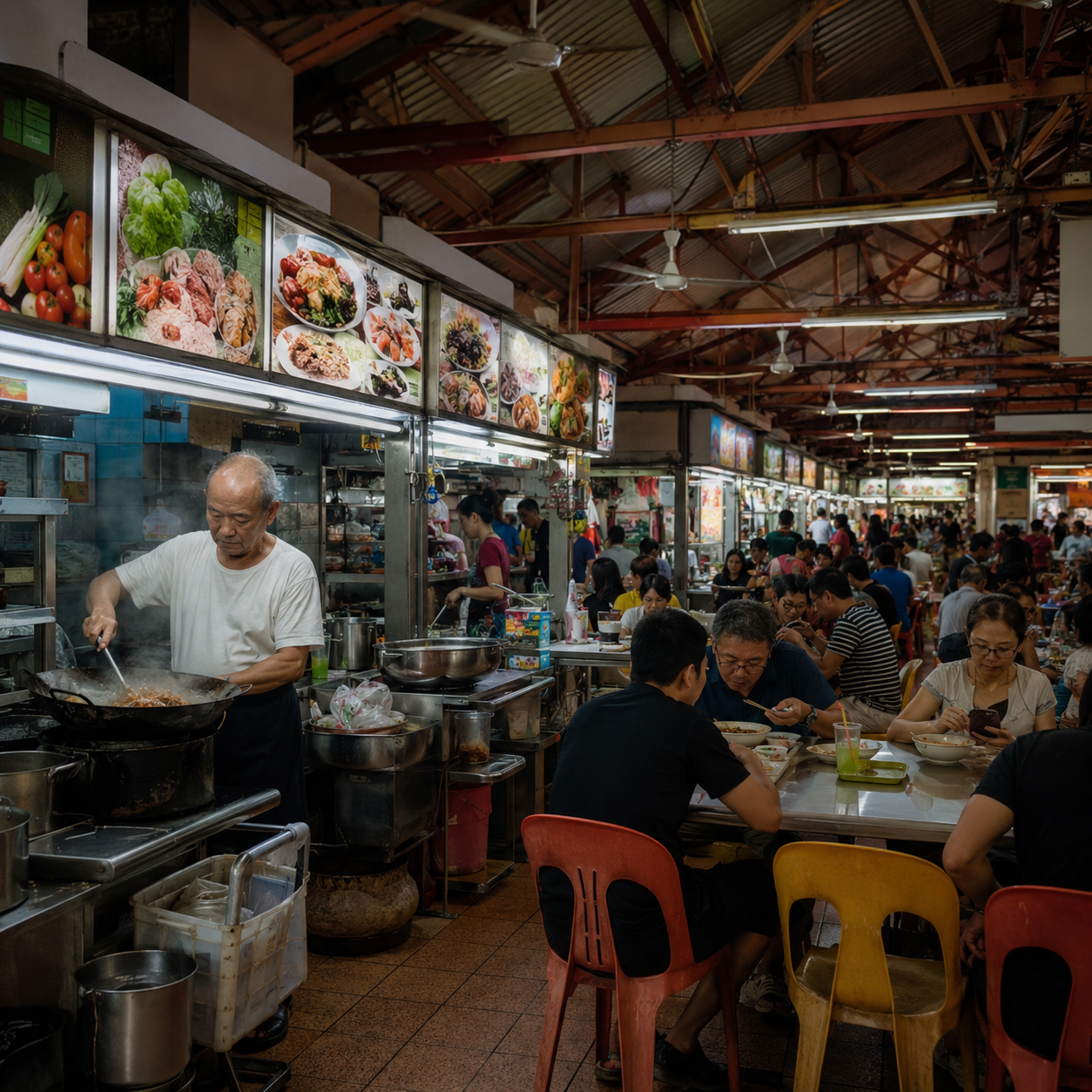
🔥 Wok hei in action. This is char kway teow being cooked over a roaring flame at a Singapore hawker stall. That smoky, slightly charred flavour, called wok hei (breath of the wok), is the entire point. You'll taste it in every great hawker dish. You can't replicate it on a home stove.
Which Hawker Centres Are the Best in Singapore?
Singapore has over 110 hawker centres and food courts. These are the ones that matter most for visitors:
Maxwell Food Centre
📍 1 Kadayanallah Rd, Chinatown | MRT: Tanjong Pagar / Chinatown
The most famous hawker centre in Singapore. Tian Tian Chicken Rice (stall 10/11) is the #1 pilgrimage, Anthony Bourdain and Obama both queued here. Also try the durian puffs, popiah, and curry fish head. Best time: 11:30am–2pm.
Chinatown Complex Food Centre
📍 335 Smith St, Chinatown | MRT: Chinatown
Singapore's largest hawker centre with 250+ stalls. Home to Hill Street Tai Hwa Pork Noodle (Michelin star, stall 02-001), bak chor mee with pork, liver, dumplings. Queue from 8am. Also has exceptional wonton mee, laksa, and roast meats.
Tekka Centre (Little India)
📍 665 Buffalo Rd, Little India | MRT: Little India
The heart of Little India's food scene. Best for: roti prata (24 hours), biryani, fish head curry, banana leaf rice (thali). The morning wet market on the ground floor is an experience in itself, fish, vegetables, tropical fruit.
Lau Pa Sat (Telok Ayer Market)
📍 18 Raffles Quay, CBD | MRT: Raffles Place
1894 Victorian cast-iron building housing a hawker centre surrounded by office towers. Diverse selection including great satay (the outdoor strip closes Boon Tat Street 7pm–midnight). Convenient for CBD visitors. Tourist-facing but genuinely good.
Old Airport Road Food Centre
📍 51 Old Airport Rd, Kallang | MRT: Dakota (CC Line)
Local favourite, less touristy. Home to Whitley Road Big Prawn Noodle and exceptional hokkien mee, duck rice, and char kway teow. Worth the MRT ride from the city (Dakota station, 3 min walk).
Tiong Bahru Market
📍 30 Seng Poh Rd, Tiong Bahru | MRT: Tiong Bahru (EWL)
In Singapore's hippest neighbourhood (great Art Deco architecture nearby). Excellent for breakfast: rojak (stall 02-09), chwee kueh (steamed rice cakes with preserved radish, stall 02-05), and char kway teow. The surrounding neighbourhood is worth exploring after breakfast.
Amoy Street Food Centre
📍 7 Maxwell Rd, CBD | MRT: Tanjong Pagar
Downtown favourite for office workers. Home to A Noodle Story (Michelin Bib Gourmand, Singapore-style ramen) and exceptional Hong Kee Beef Noodles. More eclectic mix than traditional hawker centres. Lunch-focused (mostly closed evenings).
East Coast Lagoon Food Village
📍 1220 East Coast Parkway | Bus or Grab from Bedok
Beachside hawker centre, eat satay and barbecue seafood with sea breeze and sand nearby. Best at night. Ideal combo: rent bicycles at East Coast Park → cycle → eat at the hawker centre as the sun sets.
Which Singapore Hawker Stalls Have Michelin Stars?
Singapore has the only Michelin-starred hawker stalls in the world:
| Stall | Dish | Location | Award | Price |
|---|---|---|---|---|
| Hill Street Tai Hwa Pork Noodle | Bak Chor Mee | Chinatown Complex, stall 02-001 | 1 Michelin Star | S$6–10 |
| Hawker Chan | Soy Sauce Chicken Rice | 78 Smith St + outlets | Bib Gourmand | S$3.80 |
| A Noodle Story | Singapore Ramen | Amoy Street Food Centre | Bib Gourmand | S$8–10 |
| Liao Fan Hawker Chan | Char Siu (BBQ Pork) | Smith St Taps, Chinatown | Bib Gourmand | S$3–6 |
| Hwa Kee Soya Sauce Chicken | Chicken Rice | Alexandra Village Food Centre | Locals' Favourite | S$4–6 |
| Tian Tian Hainanese Chicken Rice | Chicken Rice | Maxwell Food Centre, stall 10/11 | World Famous | S$5–7 |
How Does GST & Service Charge Work on Singapore Restaurant Bills?
Singapore's 9% GST (Goods and Services Tax) applies to all restaurant meals. Most sit-down restaurants also add a 10% service charge. Together these add 19% to the base menu price. Hawker centres charge no GST and no service charge, another reason they're such good value.
| Venue type | GST? | Service charge? | What you pay on S$30 base |
|---|---|---|---|
| Hawker centre / kopitiam | No GST | None | S$30.00 |
| Food court (in a mall) | +9% GST | None | S$32.70 |
| Casual sit-down restaurant | +9% GST | +10% | S$35.70 |
| Fine dining / hotel restaurant | +9% GST | +10% | S$35.70 |
Where Should I Eat Chilli Crab in Singapore?
Chilli crab is expensive (sold by weight, S$60–120 per crab and up). All prices below are before the standard ++19% GST and service charge. These are the top restaurants:
| Restaurant | Area | Price Range | Notes |
|---|---|---|---|
| Jumbo Seafood | East Coast / Dempsey / Harbourfront | S$55–85/kg | The go-to for tourists — consistently excellent chilli crab and black pepper crab. Book ahead. |
| Long Beach Seafood | Dempsey / Robertson Quay | S$55–90/kg | Another classic. Invented the black pepper crab. Good for groups. |
| No Signboard Seafood | Geylang / Esplanade | S$50–80/kg | Known for white pepper crab (lighter, more delicate). Excellent value. |
| Palm Beach Seafood | Marina Bay / One Fullerton | S$70–100/kg | Best waterfront setting — eat with the MBS skyline behind you. Premium location pricing. |
| Mellben Seafood | Ang Mo Kio (HDB estate) | S$45–70/kg | Local secret. No tourist markup. Queue is long on weekends but worth it. Crab beehoon is outstanding. |
Peranakan Cuisine
Peranakan food (also called Nonya cuisine) is unique to Singapore and Penang, a fusion of Chinese ingredients with Malay spices and techniques, developed over centuries by the Straits Chinese community. It's some of the most complex and time-intensive cooking in Southeast Asia.
Must-try Peranakan dishes: Buah Keluak Ayam (chicken with black Indonesian nut with earthy, rich paste), Ayam Pongteh (chicken braised in fermented bean paste and coconut palm sugar), Kueh (bite-sized cakes in vivid colours, blue from pea flower, green from pandan), and Laksa (the Peranakan version is richer and more complex than Chinese laksa).
Best restaurants: Candlenut (first Michelin-starred Peranakan restaurant, COMO Dempsey), Guan Hoe Soon (Joo Chiat Road, since 1953, the oldest Peranakan restaurant), Blue Ginger (Tanjong Pagar, mid-range and consistently excellent).
Vegetarian, Vegan & Halal Options
Halal Food
Singapore is approximately 14% Muslim and halal food is plentiful. Malay and Indian Muslim (mamak) stalls are halal. In hawker centres, look for the official halal certification (green crescent symbol). Entire hawker centres that are predominantly Muslim-operated: Geylang Serai Market, Haig Road Market. Arab Street and Kampong Glam area restaurants are almost exclusively halal.
Vegetarian
Pure vegetarian food in Singapore is primarily found at Indian vegetarian restaurants and hawker stalls. Look for: banana leaf rice (specify no meat), dhal (lentil curry), idli/vada/dosai (South Indian breakfast items), and tofu-based dishes. Many Buddhist Chinese stalls serve vegetarian versions of Chinese dishes. Indian restaurants in Little India commonly have fully vegetarian menus.
Vegan
Vegan is harder but not impossible. Specify "no egg, no dairy, no fish sauce", fish sauce (belacan) is used in many "vegetarian" dishes. The Kind Kones vegan ice cream chain and a growing number of plant-based cafes (especially in Tiong Bahru and Keong Saik Road) have expanded Singapore's vegan options significantly. Apps like HappyCow list vegan-friendly spots.
Frequently Asked Questions
A typical hawker meal, one dish of rice or noodles, drink, costs S$4–8 per person. A slightly larger meal with two dishes costs S$8–12. Add a cold drink (S$1.50–2.50) and you're eating well for S$5–10. These prices have barely changed in years thanks to government-subsidised rent for hawker stalls. This is the primary reason Singapore's cost of living, despite being one of the world's most expensive cities, remains manageable for food.
Extremely safe. Singapore's National Environment Agency (NEA) regulates all hawker stalls with regular hygiene inspections and letter grades (A, B, C) displayed at each stall. Only A and B stalls remain open in most centres. Foodborne illness from hawker centres is rare, Singapore has one of the best food safety records in the world. The only stomach issues visitors report are from adjusting to more oil and spice than they're used to, eat slowly, drink water, and your system will adjust in 1–2 days.
The Singapore Sling is a gin-based cocktail invented in 1915 by Ngiam Tong Boon, a bartender at the Raffles Hotel's Long Bar. The original recipe contains gin, cherry liqueur (Heering), Cointreau, Bénédictine, pineapple juice, lime juice, grenadine, and Angostura bitters. The Long Bar at Raffles Hotel (6 Beach Road) remains the official home of the Singapore Sling, one cocktail costs S$37 (but includes free peanuts, and you can throw the shells on the floor, a Long Bar tradition). Other bars make versions, but Raffles is the original.
- Find a table first and "chope" it — leave a tissue pack or umbrella on the seat (a Singapore custom)
- Walk the stalls to see what's available before deciding
- Order and pay at the stall counter; most stalls are cash-only, though card acceptance is growing
- Give your table number or wait at the counter — many stalls deliver to your table
- Bus your own tray when done; there are tray return stations near the exits
Walk around first and look at what's available. Order and pay at the stall — most are cash only, though larger centres accept PayNow or NETS. Take your number card and sit anywhere; food will be brought to you. Order drinks separately from a dedicated drink stall.
A kopitiam (Hokkien: kopi = coffee, tiam = shop) is a traditional private coffee shop, usually a covered shophouse ground floor with 5-12 stalls. Hawker centres are government-operated, larger, and always open-air. Kopitiams tend to be quieter and slightly cheaper. Famous chains include Ya Kun Kaya Toast and Toast Box.
Yes. Indian vegetarian stalls are common, labelled Vegetarian or Pure Vegetarian, serving banana leaf rice, thosai, and vegetable curries. Chinese vegetarian stalls with mock meat are also widespread. Look for yellow signage indicating strict vegetarian. Always confirm with the stallholder.
Chicken rice (S$3.50-5), wonton noodles (S$4-5), roti prata with curry (S$1.20/piece), or fish ball noodle soup (S$4). Add a kopi-o (black coffee, S$1.20) and you eat well for under S$6. Best prices are before 11am and after 2pm.
Maxwell Road Hawker Centre (near Chinatown) has the famous Tian Tian chicken rice and is centrally located. Lau Pa Sat is an atmospheric Victorian-era cast-iron market in the CBD. Old Airport Road Food Centre has the most local character. Newton Food Centre operates at night near Orchard Road. Avoid places where touts actively invite you in.
Yes. Singapore tap water meets WHO drinking water standards and is safe to drink directly from the tap without boiling or filtering. It is among the cleanest tap water in Asia. Bottled water is available everywhere but unnecessary.